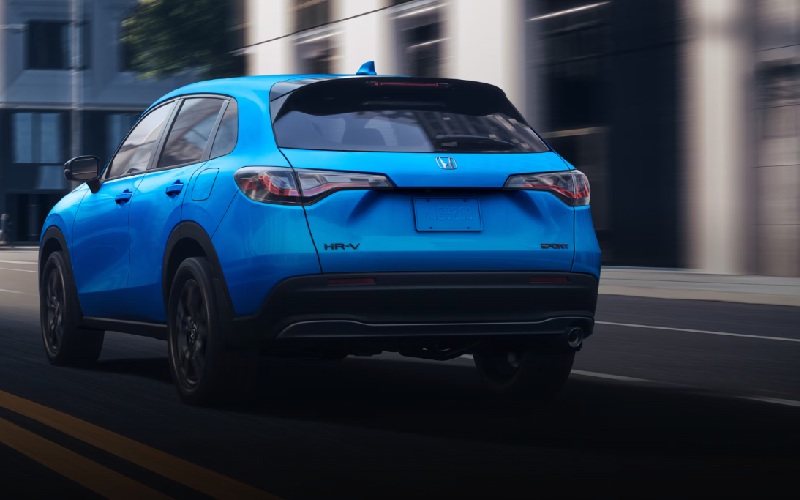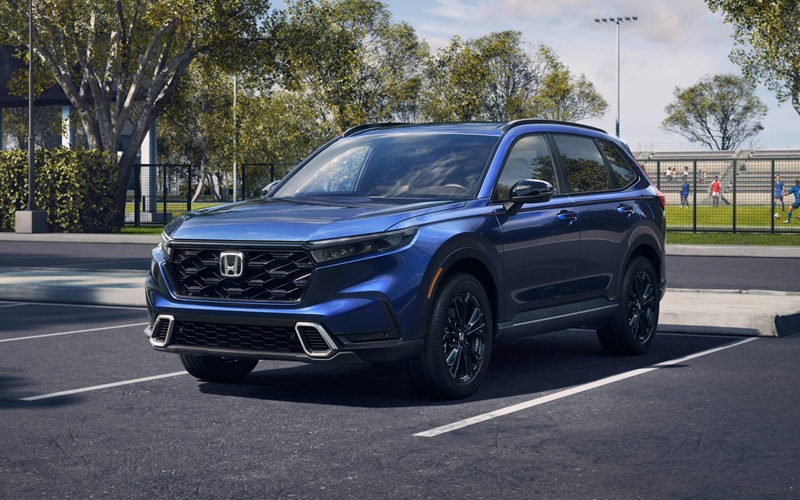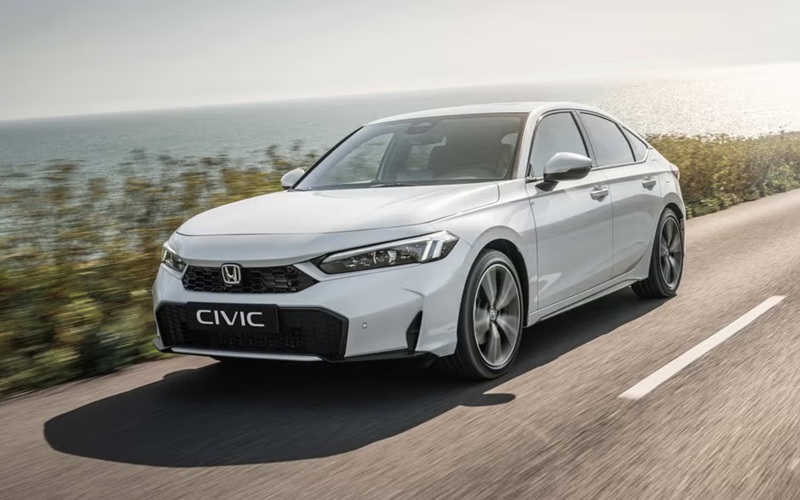

The latest Honda Civic Hybrid represents the latest evolution in the Honda commitment to efficient, environmentally conscious vehicles. At the heart of this remarkable sedan lies its innovative transmission system, designed to maximize both performance and fuel economy. The Civic Hybrid transmission is critical to delivering the smooth, responsive driving experience that has made this model a favourite among drivers seeking efficiency without compromise.
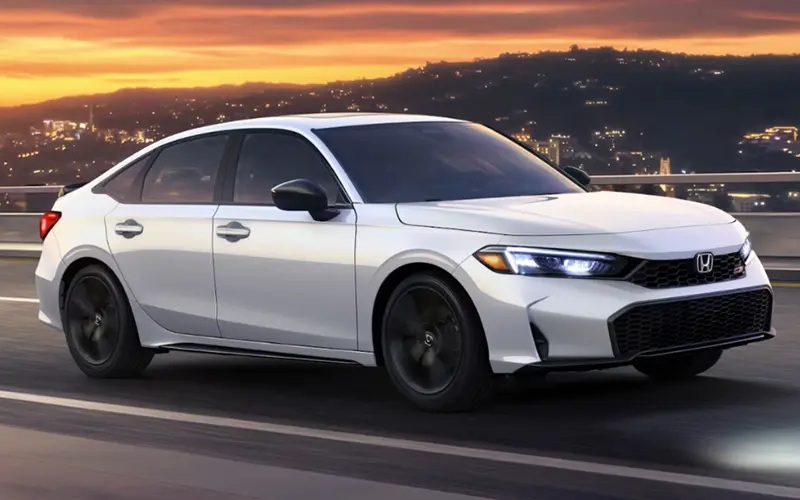
The Advanced e-CVT System
The Honda Civic Hybrid features an electronically controlled Continuously Variable Transmission (e-CVT), specifically engineered to work in harmony with its hybrid powertrain.
How the e-CVT Works
Unlike conventional automatic transmissions with fixed gear ratios, the e-CVT in the Civic Hybrid operates on a fundamentally different principle:
- Uses two electric motor-generators working in conjunction with the gasoline engine
- Creates infinitely variable gear ratios without traditional gear changes
- Eliminates the gear hunting found in conventional automatics
- Optimizes the engine’s operation to maximize efficiency
- Delivers seamless acceleration without the “stepped” feeling of traditional gears
This sophisticated system constantly adjusts the effective gear ratio to keep the engine running at its most efficient RPM regardless of vehicle speed.
Technical Specifications
The Civic Hybrid e-CVT boasts impressive specifications that contribute to its exceptional performance:
- Two-motor hybrid system integration
- Electronic shift-by-wire technology
- Deceleration selector paddles for enhanced regenerative braking
- Sport Mode for more responsive acceleration
- Advanced thermal management system for optimal efficiency in all weather conditions
- Programmed fuel cutoff during deceleration
The transmission works in concert with a 2.0-liter Atkinson-cycle four-cylinder engine and electric motors to produce a combined output of 158 kilowatts (212 horsepower).
Drive Modes and Their Effect on Transmission Behaviour
The Civic Hybrid offers multiple driving modes that directly affect transmission operation, allowing drivers to customize their experience.
ECON Mode
When engaged, ECON mode modifies the transmission’s behaviour to prioritize fuel efficiency:
* Reduces throttle sensitivity for more gradual acceleration
* Optimizes gear ratio changes to keep engine RPM lower
* Limits aggressive ratio changes during normal driving
* Modifies climate control operation to reduce engine load
* Encourages more electric-only operation when conditions permit
This mode is ideal for daily commuting and maximizing fuel economy during routine driving.
Normal Mode
The default driving setting balances performance and efficiency:
- Provides responsive acceleration without being overly aggressive
- Maintains engine RPM in the middle of the efficiency range
- Allows for more natural acceleration curves
- Balances electric motor and gasoline engine use
- Offers the most versatile transmission behaviour for varied driving conditions
Most drivers will find Normal mode ideal for everyday use, providing a balanced driving experience.
Sport Mode
For those times when performance takes priority, Sport mode transforms the transmission’s behaviour:
- Keeps engine RPM higher for more immediate power delivery
- Provides more aggressive ratio changes during acceleration
- Reduces reliance on electric-only operation
- Maximizes power availability from both the gasoline engine and electric motors
- Increases throttle sensitivity for more immediate response
Sport mode is perfect for merging onto highways or tackling winding roads where responsive acceleration enhances the driving experience.
Regenerative Braking Integration
One of the most innovative aspects of the Civic Hybrid transmission system is its integration with regenerative braking.
Paddle Selectors for Regenerative Braking
The steering wheel-mounted paddle selectors offer a unique function in the Civic Hybrid:
- Left paddle increases regenerative braking force
- Right paddle decreases regenerative braking force
- Four distinct levels of regenerative braking strength
- Visual feedback on the driver information display
- System automatically returns to normal setting when vehicle is restarted
These paddles allow drivers to control deceleration without using the brake pedal, similar to engine braking in a manual transmission vehicle, but with the added benefit of recharging the battery.
Benefits of Transmission-Integrated Regenerative Braking
This sophisticated integration offers several advantages:
- Maximizes energy recovery during deceleration
- Reduces wear on conventional friction brakes
- Provides a more engaging driving experience
- Allows for one-pedal driving in certain conditions
- Extends electric driving range by recovering energy more efficiently
The system seamlessly blends regenerative and friction braking for smooth, consistent deceleration regardless of speed or conditions.
Transmission Durability and Maintenance
Honda has engineered the Civic Hybrid e-CVT for exceptional longevity and minimal maintenance requirements.
The transmission in the Civic Hybrid requires minimal attention:
- Transmission fluid check at regular service intervals
- Transmission fluid change recommended at 100,000 km under normal driving conditions
- Earlier fluid changes recommended for severe driving conditions
- No transmission filter to replace
- Electronic diagnostics during regular service intervals
This minimal maintenance approach reduces ownership costs while ensuring reliable operation throughout the vehicle’s life.
Several design elements contribute to the exceptional durability of the transmission:
- Advanced fluid formulation with superior heat resistance
- Robust cooling system to maintain optimal operating temperature
- High-strength components engineered for hybrid torque characteristics
- Adaptive learning software that adjusts to individual driving styles
- Fail-safe modes to protect components if issues are detected
These features work together to ensure the transmission delivers reliable service throughout the vehicle’s life.
The Driving Experience
The true measure of any transmission is how it performs on the road, and the Civic Hybrid e-CVT excels in creating a refined driving experience.
Smooth, Seamless Operation
Drivers and passengers immediately notice the refined operation of the e-CVT:
- Virtual elimination of shift shock or hesitation
- Consistent acceleration without power interruptions
- Quiet operation under all driving conditions
- Immediate response to throttle inputs
- Smooth transition between electric and gasoline power
This seamless operation contributes significantly to the premium feel of the Civic Hybrid, regardless of driving conditions.
Improved Fuel Efficiency
The sophisticated transmission plays a crucial role in the Civic Hybrid impressive fuel economy:
- Optimizes engine operation for maximum efficiency
- Enables extended electric-only operation at low speeds
- Recovers energy efficiently during deceleration
- Reduces engine load during cruising
- Minimizes energy losses during power transmission
These efficiencies contribute to the vehicle’s impressive fuel economy rating of 4.2 L/100 km combined.
Performance When You Need It
Despite its focus on efficiency, the transmission doesn’t compromise on performance:
- Provides immediate acceleration for highway merging
- Delivers consistent power during passing maneuvers
- Responds quickly to sudden throttle inputs for emergency situations
- Maintains stable engine RPM during sustained high-speed driving
- Adapts to driver inputs for a more personalized driving experience
This balance of efficiency and performance represents one of the most significant achievements of the Honda engineering team.
Future Technology Path
While the Civic Hybrid transmission represents cutting-edge technology, Honda continues to develop enhancements for future models.
Enhanced Integration with Navigation
Future updates may include:
- Predictive shifting based on upcoming road conditions
- Automatic mode selection based on route characteristics
- Enhanced regenerative braking in anticipation of downhill sections
- Optimization of hybrid operation based on traffic conditions
- Learning capabilities that adapt to regular routes
These features would further optimize efficiency by anticipating driving conditions rather than simply reacting to them.
Artificial Intelligence Adaptation
Honda engineers are exploring how AI can enhance transmission performance:
- Learning individual driver preferences and patterns
- Anticipating driver needs based on historical behaviour
- Optimizing power delivery based on real-time efficiency data
- Adjusting regenerative braking strength to match driving style
- Providing personalized efficiency coaching
While not currently available on the latest model, these technologies represent the direction of Honda development efforts.
The Civic Hybrid Transmission Q&A
How does the Civic Hybrid transmission differ from a traditional automatic?
This vehicle uses an electronically controlled Continuously Variable Transmission (e-CVT) that operates fundamentally differently from a traditional automatic. Instead of using fixed gears that shift in steps, the e-CVT employs two motor-generators working with a power split device to create infinite gear ratios. This allows the engine to operate at its most efficient RPM regardless of vehicle speed. The system eliminates gear hunting and shift shock associated with conventional automatic transmissions, resulting in smoother acceleration and improved fuel efficiency. Additionally, the hybrid e-CVT doesn’t require a torque converter, further reducing drivetrain energy losses.
Can I put the 2026 Civic Hybrid transmission in neutral, and should I do so at stoplights?
Yes, the transmission can be placed in neutral using the electronic shifter. However, unlike conventional vehicles, putting the transmission in neutral at stoplights is unnecessary and actually counterproductive. This car features an automatic engine stop-start system that shuts off the gasoline engine when the vehicle is stationary, even while in drive. Shifting to neutral actually prevents some regenerative braking capabilities and disrupts the hybrid system’s efficiency. The best practice is to keep the transmission in drive and allow the automatic system to manage power flow optimally.
Does the Civic Hybrid transmission require special fluid, and can I service it myself?
This transmission uses a specific Honda-formulated fluid designed for its unique operating characteristics. This fluid has special properties to handle the thermal demands of the hybrid system and protect the electronic components within the transmission. While checking fluid levels is possible for experienced home mechanics, Honda does not recommend self-service for fluid changes. The procedure requires specific equipment to ensure proper filling and air purging. Additionally, the fluid must be disposed of properly as it contains special additives. For these reasons, transmission maintenance should be performed by authorized service centers with trained technicians and proper equipment.
Will using the paddle shifters for regenerative braking wear out the transmission faster?
No, using the paddle shifters for regenerative braking will not cause additional wear to the transmission. Unlike conventional paddle shifters that mechanically change gears, the paddles simply send an electronic signal to adjust the regenerative braking force applied by the electric motors. This process doesn’t engage additional mechanical components within the transmission and actually reduces wear on the conventional friction brakes by using the electric motors to slow the vehicle. Regular use of the regenerative braking paddles is actually beneficial for the overall hybrid system as it maximizes energy recovery and reduces brake wear.
What happens to the transmission if the hybrid battery fails?
If the hybrid battery experiences a significant failure, the vehicle enters a failsafe mode that limits performance but allows you to continue driving to a service facility. The e-CVT transmission itself remains functional, though with reduced capabilities. The system will limit electric motor assistance and regenerative braking while relying more heavily on the gasoline engine. This reduces fuel efficiency and performance but prevents you from being stranded. The comprehensive warning system will alert you with dashboard notifications if battery issues develop. The Honda warranty covers the hybrid battery and related components for peace of mind, though such failures are extremely rare given the proven reliability of Honda hybrid technology.
Disclaimer: Content contained in this post is for informational purposes only and may include features and options from US or international models. Please contact the dealership for more information or to confirm vehicle, feature availability.