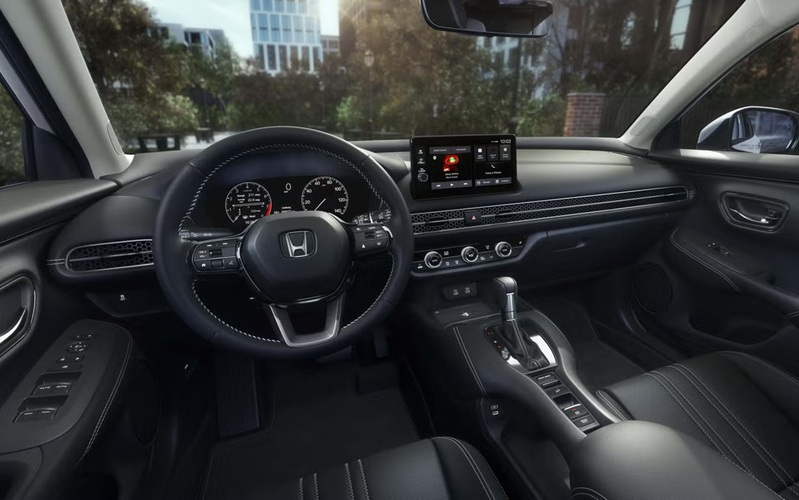

The Honda Civic uses an electronically controlled ignition system designed to provide precise spark timing, efficient combustion, reduced emissions, and stable engine performance under varying operating conditions. Modern ignition systems are integrated with the vehicle’s engine management software and rely on multiple sensors, control modules, and high-voltage ignition components.

The ignition system in the Honda Civic is engineered to support fuel efficiency, combustion stability, cold-start operation, and emissions compliance. The system continuously adjusts ignition timing according to engine speed, load, temperature, and driving conditions.
2026 Honda Civic Ignition System
The ignition system is responsible for generating and delivering high-voltage electrical energy to the spark plugs at precisely timed intervals.
Inside the engine cylinders, the spark ignites the compressed air-fuel mixture during the combustion cycle. Accurate ignition timing is critical for:
- Engine efficiency
- Power output
- Fuel economy
- Emissions control
- Engine smoothness
The Honda Civic uses a fully electronic ignition architecture integrated into the engine management system.
Unlike older distributor-based systems, modern electronic ignition systems eliminate many moving mechanical components and rely instead on sensor data and electronic controls.
Coil-on-Plug Ignition Design
The Honda Civic uses a coil-on-plug ignition configuration.
Individual Ignition Coils
In a coil-on-plug system, each engine cylinder has its own dedicated ignition coil mounted directly above the spark plug.
This arrangement provides several advantages:
- Reduced electrical loss
- More accurate spark timing
- Faster ignition response
- Improved combustion efficiency
- Reduced maintenance complexity
Each ignition coil converts low-voltage battery power into high-voltage electrical energy capable of generating spark discharge across the spark-plug electrodes.
Typical ignition voltage can exceed several tens of thousands of volts during operation.
Elimination of Spark Plug Wires
Older ignition systems used high-voltage spark-plug wires connected to a distributor.
The coil-on-plug system eliminates these long ignition wires, reducing:
- Electrical resistance
- Electromagnetic interference
- Voltage leakage
- Misfire risk
Direct coil placement also improves ignition consistency under varying engine temperatures and vibration conditions.
Engine Control Module Integration
The ignition system in the Honda Civic is electronically managed by the engine control module.
Ignition Timing Control
The engine control module determines ignition timing based on continuous input from multiple sensors.
Ignition timing refers to the precise moment when spark occurs relative to piston position during the compression stroke.
The control module continuously adjusts timing according to:
- Engine speed
- Engine load
- Air intake volume
- Throttle position
- Coolant temperature
- Knock detection
- Ambient conditions
Accurate timing optimization improves combustion efficiency and reduces emissions.
Real-Time Processing
Modern engine control systems process sensor data in real time.
The ignition control strategy can change instantly during:
- Acceleration
- Deceleration
- Cold starts
- Highway driving
- High-load operation
This dynamic adjustment capability allows the ignition system to maintain efficient combustion across a wide operating range.
Crankshaft and Camshaft Position Sensors
Precise ignition timing depends on accurate engine-position monitoring.
Crankshaft Position Sensor
The crankshaft position sensor monitors crankshaft rotation and piston position.
The sensor provides information regarding:
- Engine speed
- Crankshaft angle
- Cylinder position
This information allows the engine control module to determine exactly when ignition should occur.
Modern crankshaft sensors commonly use magnetic or Hall-effect technology to detect rotating trigger wheels attached to the crankshaft.
Camshaft Position Sensor
The camshaft position sensor identifies valve timing and cylinder sequencing.
This sensor helps synchronize:
- Ignition timing
- Fuel injection timing
- Variable valve timing systems
Together, the crankshaft and camshaft sensors provide precise engine-position data necessary for ignition control accuracy.
Spark Plug Technology
Spark plugs are the final ignition components responsible for creating the spark inside the combustion chamber.
Spark Plug Construction
A spark plug contains:
- Center electrode
- Ground electrode
- Ceramic insulator
- Metal shell
- Internal resistor
High-voltage energy from the ignition coil travels through the spark plug and jumps the electrode gap, creating electrical discharge.
This spark ignites the compressed air-fuel mixture inside the cylinder.
Electrode Materials
Modern spark plugs may use advanced electrode materials such as:
- Iridium
- Platinum
- Nickel alloys
These materials improve:
- Heat resistance
- Electrode durability
- Spark consistency
- Wear resistance
Long-life spark plugs help reduce maintenance intervals.
Heat Range Characteristics
Spark plugs are designed with specific heat ranges depending on engine operating conditions.
Proper heat range selection helps prevent:
- Carbon fouling
- Pre-ignition
- Excessive electrode temperatures
- Combustion instability
The ignition system calibration is matched to the engine’s combustion design and thermal characteristics.
Combustion Efficiency and Ignition Performance
The ignition system directly affects combustion efficiency inside the engine cylinders.
Flame Propagation
After spark discharge occurs, combustion spreads outward across the air-fuel mixture.
Accurate ignition timing ensures combustion pressure develops at the optimal moment during piston movement.
Improper timing may result in:
- Reduced power
- Increased fuel consumption
- Elevated emissions
- Engine knock
The ignition system continuously adapts timing to maintain efficient combustion.
Cold-Start Ignition Operation
Cold-start conditions create additional combustion challenges because fuel vaporization is reduced at lower temperatures.
The ignition system compensates through:
- Modified spark timing
- Increased ignition energy
- Engine-management adjustments
These changes help stabilize combustion during startup operation.
Knock Detection and Ignition Adjustment
Modern ignition systems include knock-control strategies.
Knock Sensor Function
The knock sensor detects abnormal combustion vibrations associated with engine knock or detonation.
Knock occurs when combustion pressure rises uncontrollably inside the cylinder.
Excessive knock may contribute to:
- Piston damage
- Connecting-rod stress
- Bearing wear
- Elevated thermal loads
Timing Retard Strategies
If knock is detected, the engine control module can retard ignition timing to reduce combustion pressure.
This adaptive strategy helps protect the engine under:
- Heavy acceleration
- High temperatures
- Low-octane fuel conditions
- Increased engine load
The system continuously adjusts ignition timing to balance efficiency and engine protection.
Ignition System Electrical Operation
The ignition system depends on stable electrical power and precise voltage management.
Battery and Charging System Interaction
The ignition coils receive electrical power from the vehicle’s charging system.
Stable voltage supply is important for:
- Coil saturation
- Spark energy
- Starting performance
- Idle stability
Battery condition and alternator output directly influence ignition-system reliability.
Ignition Coil Operation
Ignition coils function as electrical transformers. They convert low-voltage electrical input into high-voltage output through electromagnetic induction. Each ignition event occurs in milliseconds and must be synchronized precisely with piston position and fuel injection timing.
Emissions and Efficiency Considerations
The ignition system plays a major role in emissions control.
Combustion Completeness
Efficient ignition helps ensure complete combustion of the air-fuel mixture.
Complete combustion reduces:
- Hydrocarbon emissions
- Carbon monoxide emissions
- Fuel waste
Stable ignition performance also supports catalytic-converter efficiency.
Integration With Fuel Injection
The ignition system works together with electronic fuel injection systems.
The engine control module coordinates both systems to optimize:
- Combustion timing
- Fuel delivery
- Air-fuel ratios
- Emissions performance
This integrated approach improves engine efficiency and drivability.
Maintenance and Diagnostic Monitoring
The Honda Civic ignition system includes onboard diagnostic capabilities.
Misfire Detection
The engine control module monitors combustion behaviour and variations in crankshaft speed to identify misfires.
Potential causes of ignition-related misfires include:
- Worn spark plugs
- Coil failure
- Sensor malfunction
- Electrical connection issues
Misfire detection helps protect the catalytic converter from exposure to unburned fuel.
Service Intervals
Modern coil-on-plug ignition systems generally require less maintenance than older distributor-based systems.
However, periodic inspection of:
- Spark plugs
- Electrical connectors
- Ignition coils
- Sensor systems
remains important for long-term performance.
Westwood Honda may recommend ignition-system inspections based on mileage, operating conditions, and engine configuration.
2026 Honda Civic FAQ
What type of ignition system does the 2026 Honda Civic use?
It uses a distributorless electronic ignition system with coil-on-plug ignition coils controlled by the engine control module.
What is a coil-on-plug ignition system?
A coil-on-plug system uses one ignition coil for each cylinder, mounted directly above the spark plug to improve ignition precision and reduce electrical losses.
Why are crankshaft and camshaft sensors important?
These sensors provide engine position data that allow the control module to determine the exact ignition timing for each combustion cycle.
How does the ignition system improve fuel efficiency?
The system optimizes spark timing continuously to improve combustion efficiency, reduce fuel waste, and support stable engine operation.
What happens if an ignition coil fails?
An ignition-coil failure may cause engine misfires, rough operation, reduced power, increased fuel consumption, and higher emissions.
Disclaimer: Content contained in this post is for informational purposes only and may include features and options from US or internacional models. Please contact the dealership for more information or to confirm vehicle, feature availability.