
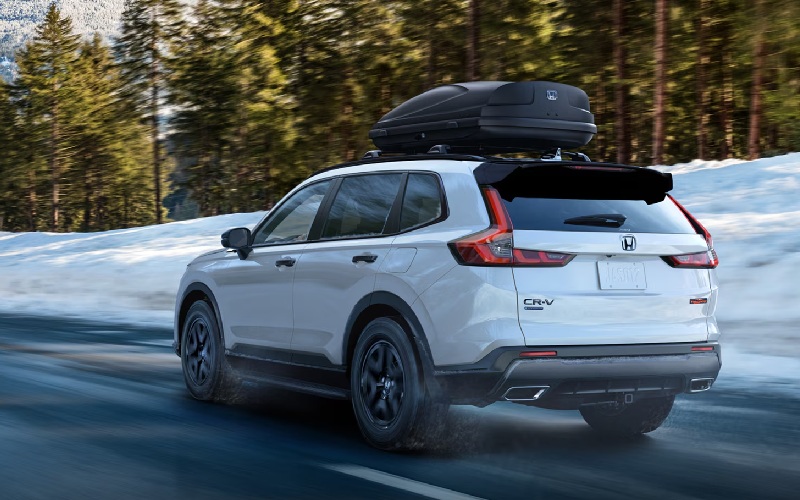
The Honda CR-V continues to set the standard in the compact SUV segment with its refined driving experience, practical interior, and advanced technology. At the heart of this popular vehicle is its transmission system, which is critical to delivering both performance and efficiency. The CR-V offers two distinct transmission options across its lineup, each engineered to complement specific powertrain configurations.
The Two Transmission Options
The Honda CR-V lineup features two different transmission systems, each paired with a specific powertrain:
Continuously Variable Transmission (CVT)
The standard gasoline-powered CR-V models (LX and Sport trims) come equipped with a Continuously Variable Transmission (CVT) that offers several advantages:
- Seamless acceleration without traditional gear shifts
- Optimized fuel efficiency through infinite gear ratios
- Reduced mechanical complexity compared to traditional automatics
- Responsive performance in various driving conditions
- Refined operation with minimal noise and vibration
This transmission works in harmony with the CR-V 1.5-liter turbocharged four-cylinder engine, which produces 190 horsepower and 179 lb-ft of torque.
Electronically Controlled Continuously Variable Transmission (eCVT)
The hybrid models (Sport FHEV, TrailSport FHEV, EX-L FHEV, and Touring FHEV) utilize an electronically controlled Continuously Variable Transmission (eCVT) that functions differently from the conventional CVT:
- Integrates with the two-motor hybrid system
- Eliminates traditional gears and pulleys found in conventional CVTs
- Provides direct power transfer from the electric motors to the wheels
- Delivers smoother acceleration and deceleration
- Enhances fuel efficiency through optimized power management
The eCVT works with the CR-V Hybrid 2.0-liter Atkinson-cycle four-cylinder engine and electric motors to produce a combined 204 horsepower and 247 lb-ft of torque.
How the CVT Works in Gasoline Models
The Continuously Variable Transmission in the non-hybrid CR-V models represents the Honda commitment to efficiency without sacrificing performance.
Technical Design
The CVT in the CR-V employs a sophisticated design:
- Uses a steel belt running between two pulleys with variable diameters
- Continuously adjusts the effective gear ratio by changing the pulley sizes
- Maintains optimal engine RPM for any given speed and load
- Features a torque converter for smooth starts from a standstill
- Incorporates the Honda G-Design shift logic for more natural-feeling acceleration
This design allows the engine to operate at its most efficient RPM regardless of vehicle speed, maximizing both performance and fuel economy.
Performance Characteristics
The CVT in the gasoline CR-V models offers several performance benefits:
- Quick initial acceleration from a stop
- Smooth, step-less power delivery during acceleration
- Reduced hunting between gears on varying terrain
- Responsive downshift behaviour when passing
- Quiet operation under normal driving conditions
Honda has refined the CVT’s programming to minimize the “rubber band” feeling sometimes associated with this transmission type, creating a more direct connection between driver input and vehicle response.
Drive Mode Integration
The CVT works in concert with the CR-V drive mode system:
- ECON mode adjusts shift patterns to prioritize fuel efficiency
- Normal mode provides balanced performance for everyday driving
- Snow mode alters power delivery for improved traction on slippery surfaces
- Sport mode (not available on LX and Sport trims) would hold the engine at higher RPMs for more responsive acceleration
These modes allow drivers to customize the transmission’s behaviour to match driving conditions and personal preferences.
The Innovative eCVT in Hybrid Models
The electronically controlled Continuously Variable Transmission (eCVT) in the hybrid CR-V models represents a significant technological advancement over conventional transmissions.
Two-Motor Hybrid System Integration
Unlike traditional transmissions, the eCVT in the CR-V Hybrid:
- Uses two electric motors instead of mechanical gears or pulleys
- Connects the engine to a generator motor that produces electricity
- Powers the wheels primarily through the second electric drive motor
- Allows the gasoline engine to operate independently of wheel speed
- Creates a direct drive feeling without conventional shifting
This arrangement eliminates many mechanical components found in traditional transmissions, potentially improving long-term reliability.
Power Delivery Characteristics
The eCVT creates a unique driving experience in the CR-V Hybrid:
- Immediate torque from the electric motor for responsive acceleration
- Smooth, linear power delivery without gear hunting
- Seamless transition between electric and gasoline power
- Quiet operation, especially during electric-only driving
- Natural deceleration feel during regenerative braking
These characteristics contribute to the refined driving experience that has made the CR-V Hybrid increasingly popular among drivers seeking both efficiency and comfort.
Enhanced Drive Modes
The hybrid models feature expanded drive mode options that directly affect how the eCVT operates:
- ECON mode maximizes efficiency by favouring electric operation
- Normal mode balances performance and efficiency
- Sport mode increases throttle response and keeps the engine more engaged
- Snow mode optimizes traction on slippery surfaces
Each mode adjusts not only the power delivery but also how the eCVT manages the interaction between the gasoline engine and electric motors.
Transmission Maintenance and Reliability
Both transmission options in the CR-V are designed for long-term reliability with minimal maintenance requirements.
CVT Maintenance
The conventional CVT in gasoline models requires:
- Fluid inspection at regular service intervals
- Fluid changes recommended every 48,000 km under normal conditions
- More frequent fluid changes for severe driving conditions
- No transmission filter replacement necessary
- No special break-in procedures
The Honda CVT fluid is specifically formulated for their transmissions and should not be substituted with generic alternatives.
eCVT Maintenance
The eCVT in hybrid models offers even simpler maintenance:
- No traditional transmission fluid changes required
- No belts or pulleys to wear out
- Reduced mechanical complexity compared to conventional transmissions
- Integrated into the hybrid system’s maintenance schedule
- Designed to last the lifetime of the vehicle under normal conditions
This simplified maintenance approach contributes to the lower long-term ownership costs associated with the CR-V Hybrid.
Real-World Performance
The transmission choice significantly impacts the CR-V driving characteristics in everyday situations.
City Driving
In urban environments:
- The CVT provides smooth, efficient acceleration from stop lights
- The eCVT excels with instant torque from the electric motor
- Both transmissions eliminate the jarring shifts of traditional automatics
- The eCVT offers superior fuel efficiency in stop-and-go traffic
- The conventional CVT provides a more familiar driving feel for those transitioning from traditional automatics
The eCVT ability to operate in electric-only mode at low speeds gives the hybrid models a particular advantage in city driving.
Highway Cruising
On the open road:
- Both transmissions maintain optimal engine RPM for efficient cruising
- The CVT can quickly adjust ratios for passing maneuvers
- The eCVT provides smooth power delivery when additional acceleration is needed
- Both transmissions contribute to the quiet cabin at highway speeds
- The eCVT’s regenerative braking enhances efficiency during deceleration
The conventional CVT may feel more responsive during quick passing maneuvers, while the eCVT provides better overall efficiency during steady highway cruising.
Off-Road and Adverse Conditions
When the pavement ends, or conditions deteriorate:
- Both transmissions work seamlessly with the available Real Time AWD system
- The CVT’s Snow mode adjusts power delivery for improved traction
- The eCVT in the TrailSport FHEV model is specially tuned for light off-road use
- Both transmissions feature hill descent control for controlled downhill driving
- The eCVT’s instant torque can be advantageous in certain off-road situations
While neither transmission is designed for extreme off-road use, both provide capable performance in the light off-road conditions most CR-V owners might encounter.
2026 Honda CR-V Transmission Q&A
What is the main difference between the CVT and eCVT in the 2026 CR-V?
- The main difference lies in their fundamental design and operation. The conventional CVT in gasoline models uses a belt-and-pulley system to provide an infinite range of gear ratios, similar to traditional automatic transmissions but without fixed gears. The eCVT in hybrid models doesn’t use belts or pulleys at all—it’s an electronic system that coordinates power between the gasoline engine and electric motors. The eCVT has fewer mechanical components, potentially offering greater long-term reliability, while providing a different driving feel with more immediate torque delivery thanks to the electric motors.
Does the CR-V CVT have the reliability issues sometimes associated with other CVTs?
- The Honda CVT design has proven to be more reliable than some competitors’ offerings. The CVT in this SUV has benefited from continuous refinement over multiple generations, addressing many of the concerns that affected earlier CVT designs from various manufacturers. Honda has focused on durability improvements, including enhanced cooling, stronger belt materials, and optimized fluid formulations. While no transmission is entirely immune to issues, the CVT has a solid reliability record when properly maintained per the recommended service intervals.
How does the eCVT in the hybrid models improve fuel efficiency?
- The eCVT improves fuel efficiency through several mechanisms. First, it allows the gasoline engine to operate independently of wheel speed, meaning it can run at its most efficient RPM regardless of how fast the vehicle is moving. Second, it enables electric-only operation at low speeds and light loads, where gasoline engines are typically least efficient. Third, it captures energy during deceleration through regenerative braking, converting kinetic energy back into electricity rather than wasting it as heat. Finally, the system’s sophisticated power management software continuously optimizes the balance between gasoline and electric power to maximize efficiency in all driving conditions.
Can I tow with both transmission types, and are there any differences in towing capacity?
- Yes, both transmission types support towing, but there are significant differences in capacity. The gasoline models with the conventional CVT offer a maximum towing capacity of 680 kg when properly equipped. The hybrid models with the eCVT have a reduced towing capacity of 453 kg. This difference exists because the eCVT and hybrid system are optimized for efficiency rather than the sustained high loads associated with heavy towing. For those who regularly tow heavier loads, the conventional CVT models would be the better choice within the CR-V lineup.
How do the drive modes affect the transmission behaviour in the 2026 CR-V?
- The drive modes significantly alter how both transmission types operate. In ECON mode, both transmissions adjust their behaviour to prioritize efficiency—the conventional CVT maintains lower engine RPMs and responds more gradually to throttle inputs, while the eCVT favours electric operation when possible. In Normal mode, both provide balanced performance for everyday driving. The hybrid models add Sport mode, which makes the eCVT more responsive by keeping the engine running more consistently and providing quicker throttle response. Snow mode in all models reduces power delivery and adjusts shift patterns to maintain traction on slippery surfaces. These modes allow drivers to customize the transmission’s behaviour to match specific driving conditions and preferences.
Disclaimer: Content contained in this post is for informational purposes only and may include features and options from US or international models. Please contact the dealership for more information or to confirm vehicle, feature availability.