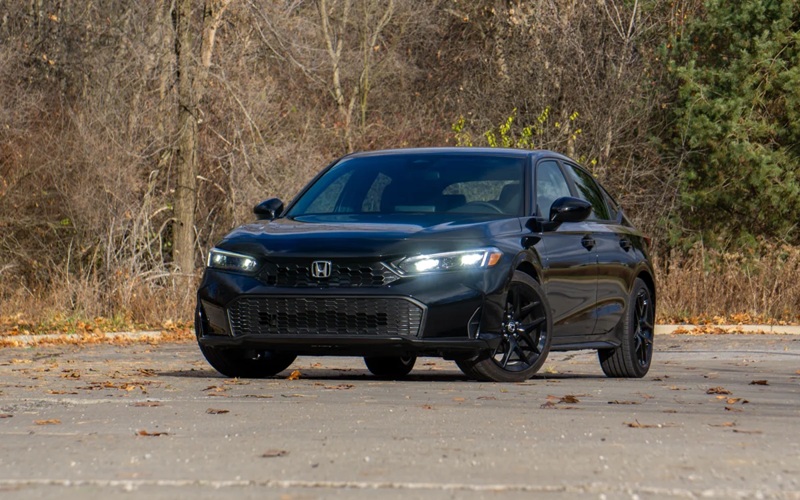

Honda Sensing on the Honda Civic is an integrated suite of driver-assist technologies that uses a forward-facing camera, radar sensor, and multiple vehicle control systems to monitor the road, identify potential hazards, and assist the driver during everyday driving. Rather than functioning as separate safety features, these technologies continuously share information to support steering, braking and acceleration while the driver remains fully responsible for operating the vehicle. Canadian-market Civic models equipped with Honda Sensing are designed to assist under a wide range of driving conditions, although weather, road markings and visibility can influence system performance.
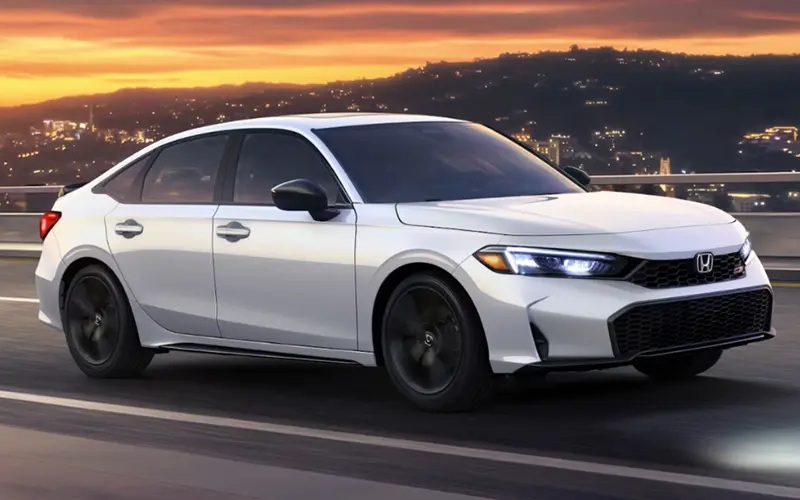
2026 Honda Civic: Honda Sensing
Honda Sensing is a coordinated driver assistance system that combines multiple technologies to improve driver awareness and support safer vehicle operation.
Unlike passive safety systems that protect occupants during a collision, Honda Sensing belongs to the category of active safety technologies. Active safety systems continuously monitor the driving environment and may provide warnings or limited vehicle control before a potential incident develops.
On the Honda Civic, Honda Sensing integrates information from the vehicle’s camera and radar system with electronic braking, steering and powertrain controls. Instead of operating independently, these components communicate through onboard electronic control units that evaluate surrounding traffic, lane markings and vehicle movement hundreds of times per second.
Depending on driving conditions, Honda Sensing may assist with:
- Detecting vehicles ahead
- Recognizing lane markings
- Maintaining a selected cruising speed
- Helping keep the vehicle centred within its lane
- Warning of potential frontal collisions
- Applying braking assistance when appropriate
- Reducing unintended roadway departures
- Recognizing certain traffic signs
Each function contributes information to the overall system, creating a coordinated approach to driver assistance rather than isolated individual features.
Cameras, Sensors and Vehicle Monitoring
Honda Sensing relies primarily on a forward-facing camera and millimetre-wave radar working together to monitor the road ahead.
The effectiveness of Honda Sensing depends on continuously gathering accurate information about the driving environment.
Forward-Facing Camera
The camera is mounted near the upper portion of the windshield behind the rear-view mirror.
Its primary responsibilities include detecting:
- Lane markings
- Road edges
- Vehicles
- Certain traffic signs
- Pedestrians under appropriate conditions
- Cyclists under appropriate conditions
The camera processes visual information similarly to how a driver observes the road, although it evaluates images digitally using pattern recognition software. The quality of camera performance depends heavily on visibility, lighting conditions and the cleanliness of the windshield.
Millimetre-Wave Radar
The forward radar sensor measures:
- Vehicle distance
- Relative speed
- Closing speed
- Position of vehicles ahead
Unlike optical cameras, radar performs well in many situations where lighting conditions are less favourable because it measures reflected radio waves rather than visible light. Radar complements the camera by providing highly accurate distance calculations, while the camera supplies visual classification of surrounding objects.
Vehicle Sensors
Honda Sensing also incorporates information from numerous vehicle sensors, including systems that monitor:
- Wheel speed
- Steering angle
- Brake pressure
- Accelerator position
- Vehicle speed
- Yaw rate
These additional inputs help determine how the Civic is moving and whether driver assistance should be provided.
Electronic Control Units
The various sensors communicate with dedicated electronic control units that analyze incoming data and determine whether driver assistance functions should activate. Rather than relying on a single sensor, Honda Sensing compares information from multiple sources before issuing warnings or intervening.
Driver Assistance System Operation
Honda Sensing combines information from its camera, radar and vehicle sensors to assist the driver during changing traffic conditions.
The technologies operate together rather than independently.
Collision Mitigation Braking System™
The Collision Mitigation Braking System™ continuously evaluates the distance and closing speed between the Civic and vehicles or certain road users ahead.
If the system determines that a collision risk is increasing, it typically progresses through several stages:
- Visual warning
- Audible warning
- Brake assistance
- Limited automatic braking when appropriate
The purpose is to reduce collision severity or help avoid certain frontal collisions if driver response is insufficient.
Adaptive Cruise Control
Adaptive Cruise Control builds upon conventional cruise control by automatically adjusting vehicle speed to maintain a selected following distance.
Using radar and camera information, the system can:
- Detect slower traffic
- Reduce vehicle speed
- Resume acceleration when traffic clears
- Maintain a selected cruising speed whenever possible
This function reduces the need for repeated accelerator and brake inputs during highway travel.
Lane Keeping Assist System
The Lane Keeping Assist System uses camera recognition of lane markings to help maintain the Civic position within clearly marked lanes. Small steering corrections may be applied when necessary to reduce unintentional lane drift. The system functions as an assistance feature rather than an automated steering system.
Road Departure Mitigation System
Road Departure Mitigation monitors whether the Civic is unintentionally approaching the edge of the roadway or crossing lane boundaries without signalling.
Depending on the situation, the system may provide:
- Visual alerts
- Audible alerts
- Steering assistance
- Brake assistance
Its objective is to help reduce unintended roadway departures.
Traffic Sign Recognition
Using the forward-facing camera, Traffic Sign Recognition identifies certain posted traffic signs and displays them on the instrument panel. The system supplements driver awareness but does not replace the driver’s responsibility to observe roadway signage.
How the Systems Work Together
One of Honda Sensing’s defining characteristics is that individual technologies continuously exchange information.
For example:
- Adaptive Cruise Control monitors following distance.
- Collision Mitigation Braking System evaluates collision risk.
- Lane Keeping Assist monitors vehicle position.
- Road Departure Mitigation observes roadway boundaries.
- Traffic Sign Recognition supplements situational awareness.
Because all systems share common sensor information, the Civic develops a broader understanding of surrounding traffic than any individual feature could provide on its own.
Situations Where Driver Input Remains Essential
Honda Sensing assists the driver but does not replace attentive driving.
Every driver assistance technology has operational limits.
System performance may be reduced when:
- Lane markings are faded
- Heavy rain limits visibility
- Snow covers road markings
- Ice obscures sensors
- Direct sunlight affects camera visibility
- Sharp curves exceed system capability
- Construction zones alter lane layouts
- Vehicles ahead behave unpredictably
Drivers must continue monitoring:
- Steering
- Braking
- Surrounding traffic
- Road conditions
- Speed selection
Hands should remain on the steering wheel whenever driver assistance systems are active. Honda Sensing supports the driver but is not designed for hands-free or fully autonomous operation.
Canadian Weather Considerations
Canadian weather can influence how Honda Sensing detects the driving environment.
Winter conditions present unique challenges for camera- and radar-based driver assistance systems.
Snow and Ice
Snow accumulation may temporarily block:
- The windshield camera
- Front radar sensor
- Exterior vehicle surfaces used by driver assistance systems
Keeping these areas clean helps maintain proper operation.
Heavy Rain
Rain can reduce camera visibility while also affecting the radar sensor’s ability to interpret surrounding traffic accurately. System performance may therefore become more limited during severe weather.
Fog
Dense fog reduces visibility for both drivers and cameras. Although radar may continue detecting vehicles ahead, some camera-based recognition functions may be reduced.
Road Salt
Road spray and salt residue can accumulate on the front of the vehicle and windshield. Routine cleaning helps preserve sensor performance throughout Canadian winters.
Low Sun Angles
During winter mornings and evenings, low-angle sunlight may create glare that affects camera recognition under certain conditions. Drivers should remain attentive whenever environmental conditions reduce visibility.
Driver Experience
Honda Sensing is designed to make everyday driving smoother while encouraging continued driver engagement.
During daily commuting, highway travel and moderate traffic, Honda Sensing operates quietly in the background.
Most interactions occur through:
- Instrument panel notifications
- Audible alerts
- Steering assistance
- Automatic speed adjustments
- Braking support when appropriate
Because interventions are generally gradual, drivers often experience the system as a continuous layer of assistance rather than a series of separate technologies. As drivers become familiar with Honda Sensing, they learn how various features respond under different traffic situations, allowing them to anticipate system behaviour better while remaining fully responsible for vehicle control.
At Westwood Honda, owners can also receive guidance on understanding the operation and limitations of Honda Sensing features specific to the Canadian-market Civic.
2026 Honda Civic: Stay Safe on the Roads
Honda Sensing on the Honda Civic represents an integrated approach to driver assistance rather than a collection of independent safety features. By combining a forward-facing camera, millimetre-wave radar, vehicle sensors and electronic control systems, the Civic continuously evaluates traffic conditions and assists with steering, braking and speed management when appropriate.
Canadian driving conditions—including changing seasons, snow, rain, road salt and varying visibility—can influence how these technologies operate, making it important for drivers to understand both their capabilities and their limitations. When used as intended alongside attentive driving, Honda Sensing contributes to a more informed and confident driving experience while preserving the driver’s central role in every journey.
2026 Honda Civic FAQ
1. Does Honda Sensing drive the 2026 Honda Civic automatically?
No. It provides driver assistance but does not replace the driver. The driver remains responsible for steering, braking, acceleration and monitoring road conditions at all times.
2. What sensors does Honda Sensing use on the Civic?
The system primarily uses a forward-facing camera, a millimetre-wave radar sensor and numerous vehicle sensors that monitor steering, braking, wheel speed and vehicle movement.
3. Can Honda Sensing work during Canadian winter conditions?
Yes, but heavy snow, ice, road salt, fog and poor visibility may reduce the effectiveness of certain camera- and radar-based functions. Keeping sensors and the windshield clean helps maintain operation.
4. How do Adaptive Cruise Control and Lane Keeping Assist work together?
Adaptive Cruise Control manages vehicle speed and following distance, while Lane Keeping Assist helps maintain the Civic position within clearly marked lanes. Together, they provide coordinated highway driving assistance while requiring continuous driver supervision.
5. Why does Honda Sensing sometimes provide warnings without applying the brakes?
The system evaluates every situation differently based on sensor data, vehicle speed and surrounding traffic. In many cases, providing an early warning allows the driver to respond before braking assistance becomes necessary.
Disclaimer: Content contained in this post is for informational purposes only and may include features and options from US or internacional models. Please contact the dealership for more information or to confirm vehicle, feature availability.