

Winter operating conditions can place additional mechanical and thermal stress on vehicle systems, making seasonal maintenance important for long-term reliability and performance. Cold temperatures affect fluid viscosity, battery efficiency, tire pressure, braking performance, and engine warm-up behaviour, especially during repeated short-distance driving.
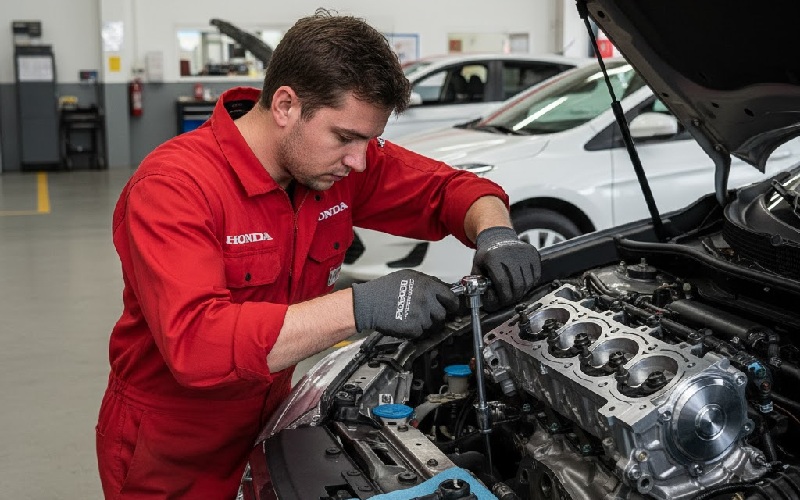
Honda winter service procedures are designed to inspect, maintain, and protect critical vehicle systems exposed to low temperatures, moisture, road salt, and changing traction conditions. These services help maintain operational stability, safety-system functionality, and drivetrain efficiency during winter driving conditions.
Battery System Inspection
Cold temperatures significantly reduce battery efficiency and cranking performance.
Battery Capacity and Temperature Effects
Lead-acid batteries experience reduced chemical activity in low temperatures. As ambient temperatures decrease, available battery output also decreases.
At temperatures near 0 °C, battery cranking efficiency may drop substantially compared to normal operating temperatures. Winter Honda service procedures often include:
- Battery voltage testing
- Cold-cranking performance checks
- Terminal inspection
- Charging-system verification
Weak batteries may struggle to deliver sufficient current to start the engine and power electronic systems during cold-weather operation.
Charging System Evaluation
The alternator and charging system must maintain stable voltage output during winter conditions.
Winter electrical loads often increase because of:
- Heated seats
- Defrosters
- Blower motors
- Exterior lighting
- Heated mirrors
- Windshield heating elements
Charging-system inspections help verify proper alternator output and electrical-system stability.
Engine Oil and Lubrication Honda Service
Engine lubrication characteristics are highly temperature dependent.
Oil Viscosity Performance
Cold temperatures increase oil viscosity, making engine circulation slower during startup.
Winter service commonly includes:
- Engine oil inspection
- Oil-condition evaluation
- Filter replacement
- Verification of viscosity specifications
Modern synthetic oils are formulated to maintain improved low-temperature flow characteristics while preserving lubrication under high operating temperatures.
Proper lubrication during cold starts helps reduce:
- Internal friction
- Bearing wear
- Camshaft wear
- Timing-chain stress
Engine Warm-Up Characteristics
Repeated short trips during winter can prevent the engine from reaching optimal operating temperature.
This may contribute to:
- Moisture accumulation
- Fuel dilution
- Condensation buildup
- Increased oil contamination
Winter maintenance helps ensure lubrication systems remain effective under these operating conditions.
Honda Service Cooling System Inspection
Although commonly associated with heat management, the cooling system is equally important during winter operation.
Coolant Freeze Protection
Engine coolant contains antifreeze compounds designed to lower the freezing point and increase boiling resistance.
Winter cooling-system service may include:
- Coolant concentration testing
- Freeze-point inspection
- Leak checks
- Hose evaluation
- Water-pump inspection
Incorrect coolant concentration can increase the risk of coolant freezing, restricted circulation, or overheating.
Thermostat Operation
The thermostat regulates coolant flow and engine operating temperature.
A malfunctioning thermostat may cause:
- Slow cabin heating
- Reduced fuel efficiency
- Improper engine temperature regulation
- Increased emissions
Winter Honda service inspections help verify proper thermostat operation and cooling-system stability.
Tire Inspection and Winter Performance
Tires experience major performance changes in cold temperatures.
Tire Pressure Changes
Air pressure decreases as ambient temperature drops.
Even moderate temperature reductions may lower tire pressure enough to affect:
- Handling stability
- Braking performance
- Fuel efficiency
- Tire wear
Winter service commonly includes tire-pressure adjustment according to manufacturer specifications.
Tread Depth Evaluation
Winter traction depends heavily on tread depth and tread design.
Technicians often inspect:
- Tread wear patterns
- Sidewall condition
- Uneven wear
- Tire aging
Insufficient tread depth reduces water evacuation and snow traction capability.
Wheel Alignment
Winter road conditions, potholes, and ice impacts may affect wheel alignment.
Improper alignment can contribute to:
- Uneven tire wear
- Steering instability
- Reduced traction
- Increased rolling resistance
Alignment inspections may be recommended during seasonal maintenance.
Brake System Honda Service
Brake performance is especially important during winter conditions where traction levels may vary significantly.
Brake Pad and Rotor Inspection
Winter moisture and road salt can accelerate corrosion on brake components.
Brake inspections typically include evaluation of:
- Pad thickness
- Rotor condition
- Brake hardware
- Caliper operation
Corrosion buildup may affect braking consistency and component movement.
Brake Fluid Inspection
Brake fluid absorbs moisture over time.
Excessive moisture contamination may lower brake-fluid boiling resistance and contribute to internal corrosion.
Winter service procedures may include:
- Fluid-condition testing
- Leak inspection
- Hydraulic-system evaluation
Maintaining proper hydraulic performance is important for anti-lock braking systems and electronic stability systems.
Heating and Climate Control Systems
Cabin heating systems depend on proper cooling-system and HVAC operation.
Heater Core Functionality
The heater core transfers engine heat into the passenger compartment.
Winter inspections may evaluate:
- Cabin heating performance
- Coolant circulation
- Blower operation
- Airflow consistency
Restricted heater-core flow may reduce heating efficiency.
Defroster and Defogger Systems
Windshield visibility is critical during winter driving.
Defroster inspections commonly include:
- Airflow testing
- Vent operation
- Rear defogger functionality
- Climate-control calibration
Proper defrosting performance helps maintain visibility during freezing and humid conditions.
Windshield Washer and Wiper Service
Winter weather increases demands on windshield-cleaning systems.
Washer Fluid Performance
Winter washer fluids resist freezing at low temperatures.
Seasonal Honda service often includes:
- Washer-fluid replacement
- Reservoir inspection
- Nozzle cleaning
- Pump-function testing
Frozen washer fluid may impair windshield cleaning capability.
Wiper Blade Inspection
Low temperatures can harden rubber wiper materials, reducing wiping efficiency.
Technicians may inspect:
- Blade flexibility
- Rubber cracking
- Streaking performance
- Arm tension
Effective wiper operation is important for visibility during snow and freezing precipitation.
Drivetrain and AWD System Inspection
Honda all-wheel-drive systems require proper lubrication and proper electronic control system operation during winter conditions.
Differential and Transfer Components
Winter inspections may include evaluation of:
- Differential fluid condition
- Transfer-system operation
- Driveline seals
- Axle components
Cold temperatures can increase fluid viscosity and mechanical resistance during initial operation.
Electronic Traction Systems
Modern Honda vehicles use integrated electronic systems including:
- Traction control
- Stability control
- ABS
- AWD torque management
Winter service may include diagnostic system checks to confirm proper sensor and control module functionality.
Underbody and Corrosion Protection
Road salt and moisture can accelerate corrosion on exposed underbody components.
Underbody Inspection
Seasonal inspections may evaluate:
- Suspension components
- Exhaust systems
- Brake lines
- Fuel lines
- Protective coatings
Corrosion prevention is important in regions with heavy road salt use.
Drainage System Cleaning
Blocked drainage channels can trap moisture and contribute to corrosion or interior water intrusion.
Winter maintenance may include cleaning of:
- Sunroof drains
- Door drains
- Cowl drains
Proper drainage helps reduce moisture accumulation.
Fuel System Considerations
Cold temperatures affect fuel vaporization and combustion efficiency.
Fuel Injector Operation
Winter operation may increase carbon deposits due to extended idling and short trips.
Fuel-system inspections can help evaluate:
- Injector performance
- Fuel-pressure stability
- Idle quality
Fuel Economy Changes
Winter driving results in increased fuel consumption commonly because of:
- Longer warm-up periods
- Increased accessory loads
- Colder air density
- Reduced tire pressure
Proper seasonal maintenance helps maintain efficient system operation.
Electronic Systems and Sensor Operation
Modern Honda vehicles rely heavily on electronic monitoring systems.
Sensor Reliability
Cold weather may affect the operation of:
- Tire-pressure sensors
- Parking sensors
- Camera systems
- Radar systems
Winter inspections may verify sensor cleanliness and diagnostic-system functionality.
Software and Control Systems
Electronic control modules coordinate multiple winter-related systems including traction control and climate management.
Service inspections may include diagnostic scanning to identify stored fault codes or irregular sensor readings.
Honda Service FAQ
What Honda service is most important during winter?
Battery inspection, tire evaluation, brake inspection, cooling-system testing, and engine oil maintenance are among the most important winter maintenance procedures.
Why does cold weather affect battery performance?
Low temperatures reduce chemical activity inside the battery, decreasing available cranking power and overall electrical efficiency.
Should tire pressure be checked more often in winter?
Yes. Tire pressure decreases as temperatures drop, which can affect traction, braking performance, and tire wear.
Why is coolant important during winter?
Coolant prevents freezing, supports engine temperature regulation, and protects internal cooling-system components from corrosion.
Does winter driving affect engine oil condition?
Yes. Repeated cold starts and short trips may increase moisture buildup and contamination inside the engine oil, affecting lubrication performance.
Westwood Honda can provide winter maintenance recommendations based on specific Honda models, driving conditions, and seasonal operating environments.
Disclaimer: Content contained in this post is for informational purposes only and may include features and options from US or internacional models. Please contact the dealership for more information or to confirm vehicle, feature availability.