

Scheduled Honda Service helps maintain the safety, efficiency and long-term reliability of Honda vehicles by following manufacturer-recommended inspections and maintenance procedures. Rather than relying solely on fixed distance intervals, modern Honda vehicles sold in Canada use maintenance reminders based on actual operating conditions, helping owners perform service when vehicle systems require attention. Regular inspections, fluid replacement, brake service, tire maintenance and seasonal preparation all contribute to preserving vehicle performance throughout Canadian ownership.
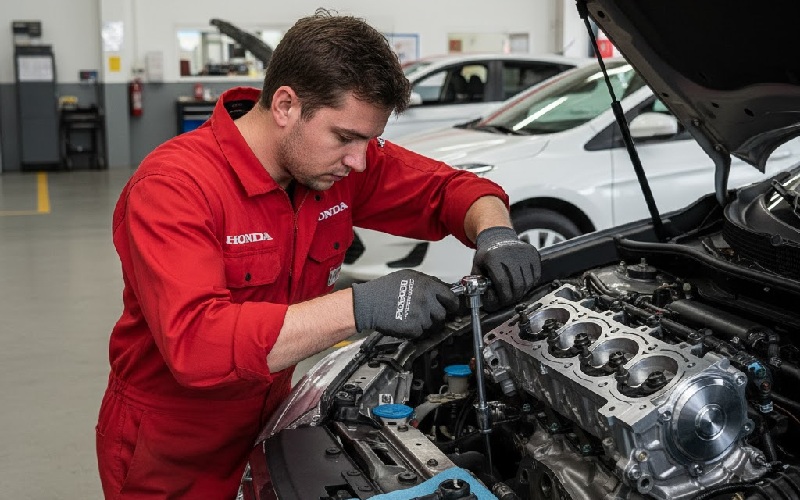
What Is Included in Honda Service?
Honda Service includes manufacturer-recommended inspections, maintenance procedures and component replacements designed specifically for Honda vehicles operating under Canadian conditions.
Scheduled maintenance is a planned series of inspections and service procedures intended to keep vehicle systems operating within their designed specifications throughout the vehicle’s life.
Unlike generic maintenance programs, the Honda service philosophy considers how individual vehicle systems age and how driving conditions affect wear over time. Modern Honda vehicles continuously monitor factors such as engine operating conditions, driving habits and environmental influences to determine when maintenance is required.
Depending on the vehicle and maintenance reminder, Honda Service may include:
- Engine oil replacement
- Oil filter replacement
- Brake inspection
- Tire rotation
- Tire pressure inspection
- Fluid condition inspections
- Brake fluid replacement
- Air filter replacement
- Cabin air filter replacement
- Cooling system inspection
- Suspension inspection
- Steering system inspection
- Battery inspection
- Drive belt inspection
- Windshield washer system inspection
- Wiper blade inspection
Rather than replacing every component at identical intervals, the Honda maintenance approach focuses on inspecting systems according to actual operating conditions while replacing service items only when appropriate.
Scheduled Maintenance Items
Scheduled maintenance addresses the gradual wear that occurs in mechanical, hydraulic and electrical vehicle systems throughout normal operation.
Understanding what each service item accomplishes helps owners appreciate why manufacturer recommendations should be followed.
Engine Oil and Oil Filter
Engine oil lubricates moving internal engine components while helping remove heat and suspend contaminants produced during combustion.
Over time, oil gradually loses its protective characteristics because of:
- Heat exposure
- Oxidation
- Moisture accumulation
- Fuel dilution
- Combustion by-products
Replacing both the engine oil and oil filter helps maintain lubrication quality while preventing contaminants from circulating through the engine.
The Honda maintenance reminder system determines when oil replacement is appropriate based on actual operating conditions rather than mileage alone.
Brake Fluid
Brake fluid transfers hydraulic pressure from the brake pedal to the braking system.
As brake fluid ages, it gradually absorbs moisture from the atmosphere, which may reduce braking consistency under demanding operating conditions.
Regular brake fluid replacement helps preserve:
- Hydraulic pressure
- Brake pedal feel
- Internal corrosion resistance
- Overall braking performance
This maintenance item is particularly important in Canada, where seasonal temperature changes and humidity variations can affect fluid condition over time.
Engine Air Filter
The engine air filter prevents dust, dirt and airborne debris from entering the engine.
A clean filter supports:
- Proper airflow
- Efficient combustion
- Engine performance
- Reduced internal engine wear
Vehicles frequently driven on gravel roads or through construction zones may require more frequent inspections.
Cabin Air Filter
The cabin air filter removes airborne particles before outside air enters the passenger compartment through the heating and air conditioning system.
Replacing the cabin air filter helps maintain:
- Interior air quality
- Ventilation efficiency
- Heating performance
- Air conditioning airflow
Canadian driving conditions that include pollen, road dust and winter road debris may accelerate filter contamination.
Tire Rotation
Tire rotation changes each tire’s position on the vehicle to promote more even tread wear.
Because front and rear tires experience different steering, braking and acceleration forces, rotating tires at recommended intervals helps maximize tread life while maintaining predictable handling characteristics.
Brake Inspection
Routine brake inspections evaluate:
- Brake pad thickness
- Brake rotor condition
- Caliper operation
- Brake hoses
- Brake lines
- Parking brake performance
Brake inspections allow worn components to be identified before braking performance is affected.
Seasonal Service Considerations in Canada
Canadian weather places additional demands on Honda vehicles throughout the year, making seasonal maintenance an important part of scheduled service.
Canada’s wide range of temperatures means vehicle systems often experience both extreme cold and high summer temperatures during the same year.
Winter Preparation
Cold temperatures affect several vehicle systems simultaneously.
Before winter, Honda Service commonly includes inspection of:
- Battery condition
- Charging system
- Cooling system
- Tire condition
- Tire pressure
- Windshield washer system
- Windshield wiper blades
- Exterior lighting
- Heating system
- Defroster operation
Battery performance naturally decreases as temperatures fall, making pre-winter inspections particularly valuable.
Road Salt Protection
Road salt helps improve winter driving conditions but also accelerates corrosion.
Regular cleaning of the vehicle’s:
- Undercarriage
- Suspension components
- Brake assemblies
- Wheel wells
helps reduce salt accumulation throughout the winter season.
Tire Pressure Changes
Air pressure changes naturally as temperatures fluctuate.
Regular tire pressure inspections help maintain:
- Proper handling
- Braking stability
- Tire wear
- Fuel efficiency
Maintaining manufacturer-recommended tire pressures also allows Honda safety systems to operate as intended.
Summer Driving
Warm weather places additional thermal loads on several systems.
Seasonal inspections help confirm the proper operation of:
- Cooling system
- Air conditioning system
- Engine cooling fans
- Fluid levels
These inspections become especially important before extended summer highway travel.
How Regular Service Protects Vehicle Systems
Routine maintenance slows normal wear while allowing the Honda integrated vehicle systems to continue operating as designed.
Every maintenance procedure contributes to preserving one or more major vehicle systems.
Engine
Regular lubrication reduces friction between moving components while helping maintain proper engine operating temperatures. Replacing contaminated oil helps reduce internal wear and supports long-term engine durability.
Transmission
Although transmission maintenance varies depending on the specific Honda model and powertrain, routine inspections help verify proper operation and identify fluid-related concerns before they affect performance.
Clean transmission fluid supports:
- Hydraulic operation
- Gear engagement
- Internal lubrication
- Heat management
Braking System
Routine inspections help maintain:
- Consistent stopping performance
- Balanced brake operation
- Even brake wear
- Hydraulic system integrity
Maintaining braking components also supports the operation of Honda safety technologies that rely on precise brake control.
Steering and Suspension
Steering and suspension inspections evaluate components that influence:
- Ride comfort
- Vehicle stability
- Steering precision
- Tire wear
Early identification of worn suspension components helps preserve predictable handling.
Driver Assistance Systems
Many modern Honda vehicles include advanced driver assistance technologies that rely on multiple sensors, cameras and braking systems.
Maintaining tires, brakes and steering components helps these integrated systems perform within their intended operating parameters.
Service Records and Long-Term Ownership
Maintaining accurate service records documents vehicle history while supporting long-term ownership.
A complete maintenance history provides evidence that manufacturer-recommended service has been performed consistently.
Service records typically include:
- Maintenance dates
- Completed inspections
- Fluid replacements
- Filter replacements
- Brake service
- Tire service
Keeping organized maintenance documentation also makes it easier to monitor future service requirements.
For owners planning long-term ownership, consistent maintenance reduces the likelihood that minor wear develops into larger mechanical issues requiring more extensive repairs.
At Westwood Honda, manufacturer-recommended maintenance procedures are performed according to Honda service requirements for Canadian vehicles.
Frequently Overlooked Maintenance Items
Some maintenance procedures receive less attention than oil changes but remain important for long-term reliability.
Several components are commonly overlooked despite their role in vehicle performance.
Windshield Wiper Blades
Wiper blades gradually deteriorate due to:
- Sunlight
- Ice
- Snow
- Dirt
- Temperature changes
Replacing worn blades helps maintain visibility during heavy rain and winter weather.
Washer Fluid
Canadian winter driving often requires frequent windshield cleaning because of road salt and slush. Maintaining an appropriate washer fluid level supports safe visibility throughout the colder months.
Battery Connections
Corrosion on battery terminals can interfere with electrical performance. Routine inspection helps ensure reliable starting and charging system operation.
Exterior Lighting
Regular inspection of headlights, brake lights, turn signals and daytime running lights helps maintain visibility for both the driver and surrounding traffic.
Tire Tread
Even when tire pressure remains correct, tread depth gradually decreases with use. Monitoring tread wear helps preserve traction on wet, snowy and icy Canadian roads.
Get the Best Honda Service
Honda Service is designed to support the long-term reliability, safety and efficiency of Honda vehicles by following manufacturer-recommended maintenance procedures that reflect actual operating conditions. Through scheduled inspections, fluid replacement, brake service, tire maintenance and seasonal preparation, owners can help preserve the performance of major vehicle systems throughout every stage of ownership.
Canadian driving introduces unique challenges, including freezing temperatures, road salt, changing weather and varying road surfaces. Following the Honda recommended maintenance schedule helps vehicles remain prepared for these conditions while supporting dependable operation over the long term. Whether maintaining a sedan, SUV, minivan or pickup, consistent scheduled service remains an essential part of responsible Honda ownership.
Honda Service FAQ
1. How do Honda vehicles determine when maintenance is required?
Many Honda vehicles sold in Canada use a maintenance reminder system that monitors vehicle operating conditions and indicates when scheduled service should be performed.
2. Why is brake fluid replacement important?
Brake fluid gradually absorbs moisture over time. Replacing it according to the Honda maintenance recommendations helps maintain hydraulic braking performance and protects internal brake system components.
3. Why should tires be rotated regularly?
Rotating tires promotes even tread wear, helping maintain predictable handling, braking performance and tire longevity.
4. Does Canadian winter weather affect maintenance requirements?
Yes. Cold temperatures, road salt and seasonal weather changes increase the importance of battery inspections, tire pressure checks, cooling system inspections, windshield washer fluid maintenance and underbody cleaning.
5. Why are service records important?
Maintaining complete service records documents that recommended maintenance has been performed, helps track future service requirements and supports long-term vehicle ownership.
Disclaimer: Content contained in this post is for informational purposes only and may include features and options from US or internacional models. Please contact the dealership for more information or to confirm vehicle, feature availability.